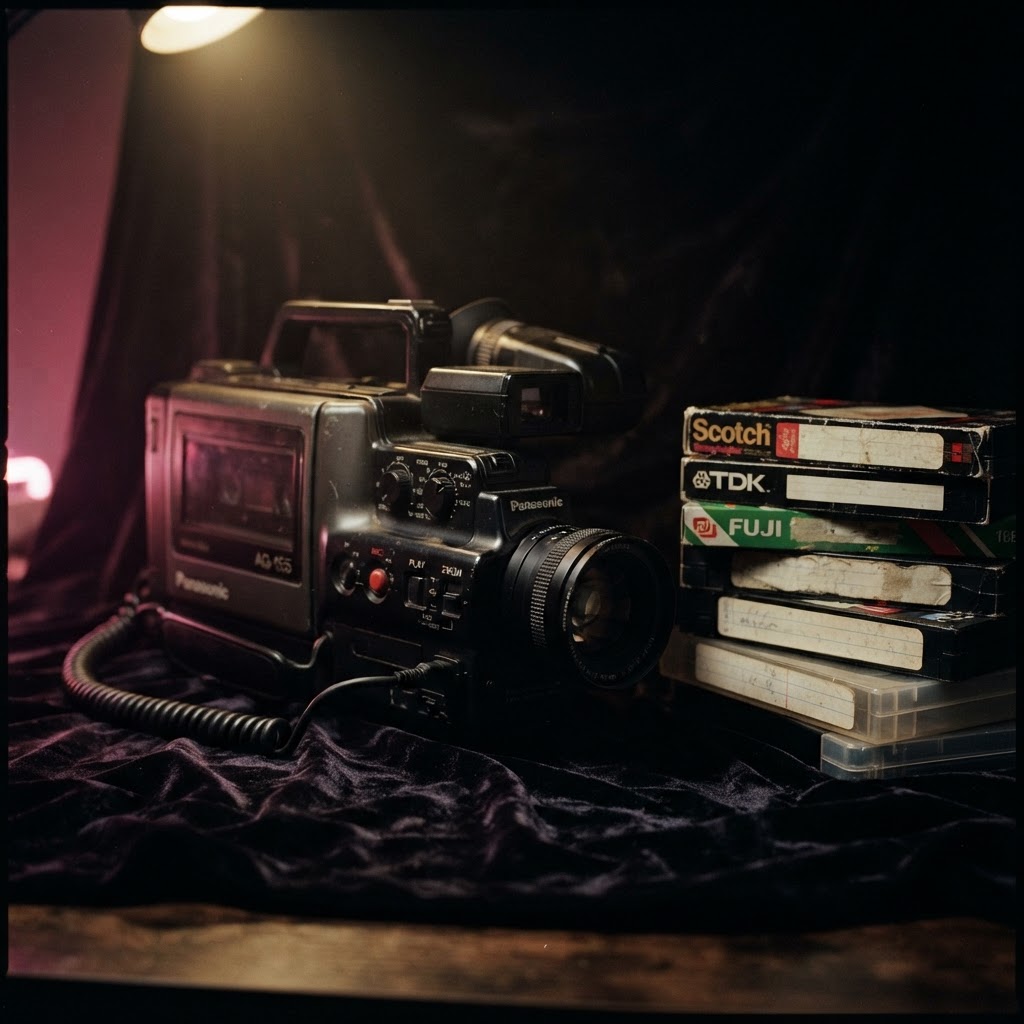
How did one low-budget collective manage to produce over four thousand individual scene shoots in one year?
In an era of analog limitations, one rogue production house achieved a blistering output that still defies modern logic. We examine the math behind their obsession.
The short answer
During the mid-1970s, the infamous collective known as VCI achieved the impossible by shooting over four thousand individual scenes within a single twelve-month cycle. By leveraging a radical, non-stop production schedule that treated film like a renewable resource, they maintained a pace of eleven completed scenes every single day.
The Infinite Catalog: The 1970s Guerilla Archive That Never Ended · 976 words
The history of adult entertainment is littered with exaggerated claims and inflated box office receipts that collapse under the slightest scrutiny. However, sometimes the truth is far more stranger than the marketing departments would have us believe. We are looking at a time when celluloid was king, editing was done with razor blades, and the concept of a rest day was purely theoretical.
Deep in the archives of mid-1970s independent cinema, there exists a production logbook that seems to have been written by a madman. It details an unrelenting schedule that saw a single, relatively small collective of technicians and performers output thousands of individual scenes in a solitary year. It sounds like an urban legend propagated by too many long nights in the editing suite, yet the ledger books remain. How does a team move at such a breakneck velocity without losing their collective minds or their film stock?
The Logistics of Obsession
The secret to this staggering output was not a revolutionary technology, but a ruthless commitment to serial efficiency. Unlike modern studios that might spend weeks on pre-production for a single feature, this collective operated on a rolling production model that functioned more like a high-speed assembly line. They minimized overhead by standardizing set designs and lighting rigs, allowing them to shift from one concept to another in a matter of minutes.
This was the era of the guerrilla shoot, where time was the only true enemy. The crew operated in two shifts, effectively turning their warehouse studio into a twenty-four-hour engine of creation. While one group was wrapping a sequence, another was already setting the stage for the next. This overlap ensured that the cameras rarely cooled down, creating a rhythm of perpetual motion that would exhaust a modern production company before the first coffee break.
By keeping the cast and crew tethered to the location for long-term residencies, the studio eliminated the downtime associated with commuting and talent acquisition. They mastered the art of the 'one-take' environment, knowing that their audience valued the raw, unfiltered energy of the performances over the polished perfection of a high-budget feature.

The Math of the Machine
To reach the number of four thousand scenes in a year, the collective had to maintain an average of eleven distinct setups per day, seven days a week. For the uninitiated, that is a pace that most seasoned cinematographers would claim is physically impossible under standard film conditions. Yet, they achieved it by simplifying their technical requirements to the absolute essentials.
They prioritized direct lighting and fixed camera angles, which removed the need for elaborate blocking or complex camera movements. This technical austerity wasn't just a stylistic choice; it was a survival mechanism. By removing the need for frequent retakes, they ensured that the vast majority of their footage made it directly into the final edit. Every frame counted, and every minute was accounted for in the master logbook.
This wasn't just about speed, however. It was about volume-based economics in a market that couldn't get enough content. Every single scene produced was a distinct product that could be packaged into various compilations, anthologies, or recurring series. The market was hungry, and they provided the fuel, turning a small, gritty studio space into a powerhouse that dominated the underground rental shelves for the better part of the decade.
Legacy of the High-Speed Era
Today, we operate in a digital landscape where the cost of storage is negligible and the speed of upload is nearly instantaneous. Yet, even with all our modern advantages, the sheer work ethic displayed by those pioneers remains intimidating. They proved that with enough focus and a complete disregard for traditional industry standards, a small group of people could redefine the output potential of an entire medium.
Their legacy isn't found in the artistic polish of their work, but in the audacity of their business model. They forced the industry to reckon with the reality that demand would always outpace production unless the barriers to creation were shattered. They were the original disruptors, building a massive library from nothing but grit, film reels, and an almost superhuman dedication to the clock.
Looking back, it serves as a reminder that the most significant milestones are often the result of doing the simple things, perfectly and repeatedly. As we navigate the future of digital entertainment, we can appreciate the foundation laid by those who chose to shoot, cut, and repeat until they made history.

Questions about this one
Discover the high-octane production schedule of a 1970s studio that produced thousands of scenes in a single year.
The Adult Site List · Trivia Desk
More trivia from the desk